


We transform legacy communication systems into innovative, highly-adopted engagement platforms that support resident well-being and staff efficiency.


%20(5).png)
If you lead a Life Plan Community, you already know the truth- strong culture and a full calendar doesn't guarantee resident engagement.
Residents have to be able to find what’s happening, feel confident signing up, and stay connected to neighbors and staff. When that information lives on paper, on bulletin boards, and across multiple systems, the experience gets harder. Staff effort goes up. Resident follow-through goes down.
Sunnyside Communities hit that moment and decided to make a change.
Sunnyside is a multi-site Life Plan Community organization in Virginia with roots that trace back to a charter granted in 1912. Sunnyside Communities is built around one simple idea: community and relationships matter.Across three communities, their leadership team focuses on helping residents live vibrant, engaged lives built on community and relationships.
Sunnyside was trying to modernize communication, but the day-to-day reality was still paper-heavy. Menus were posted around campus. Calendars were printed and distributed. Updates were shared in ways that depended on someone seeing them at the right time.
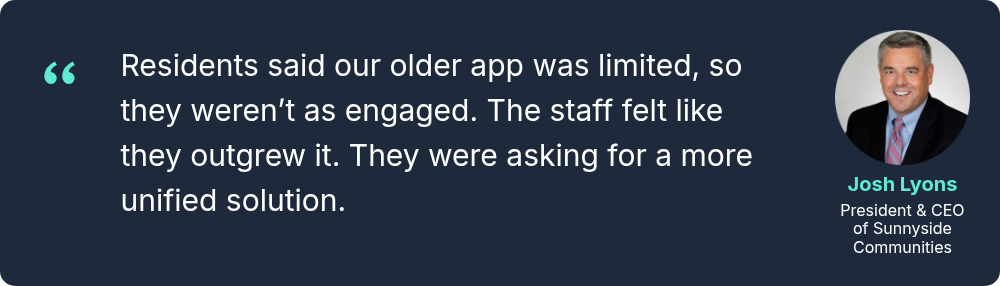
They were also using a legacy resident platform. Over time, it started to feel limited.
The top drivers were clear:
The goal was straightforward: make it easy for residents to stay informed and show up, without staff doubling their work.
This was not a change for novelty’s sake. Sunnyside wanted to remove the friction that comes from running engagement through disconnected channels.
They wanted to move away from:
Sunnyside wanted something residents would actually use, not something they would tolerate.
They were looking for a single source for residents to know what is happening around the community, reminders that help them follow through with events, and connection tools that support resident-to-resident communication, not just announcements coming from staff.
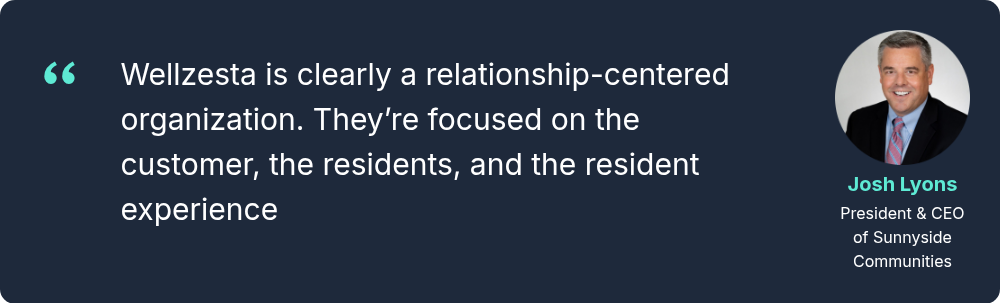
They also called out the relationship-centered approach.
One of the most useful parts of Sunnyside’s story is that they did not treat adoption as a technical deployment. They treated it like change management.
They planned a staged rollout with staff training, resident ambassador enablement, and in-person sessions across campuses. They also created feedback loops, where residents raised friction points in open meetings and staff worked through those issues with training, education, and follow-up with Wellzesta when needed.
Sunnyside also prioritized buy-in. They took time to socialize the change instead of forcing a new tool on residents. Over time, staff reported fewer help desk calls compared to the prior platform and a smoother day-to-day experience.
Sunnyside's leaders described a shift from “seeing a flyer” to “getting a nudge.” For residents, reminders can be the difference between knowing something is happening and actually showing up.
“We’ve noticed significant improvement in participation… because even just the fact that they get reminders,” Josh Lyons said.
The case study also highlights early metrics including 85% average attendance per event and 75% total active users.
On the staff side, the impact showed up in simpler communication workflows and faster updates, including time-sensitive situations like weather. Residents also had easier access to menus, events, and updates in a single place they actually check.
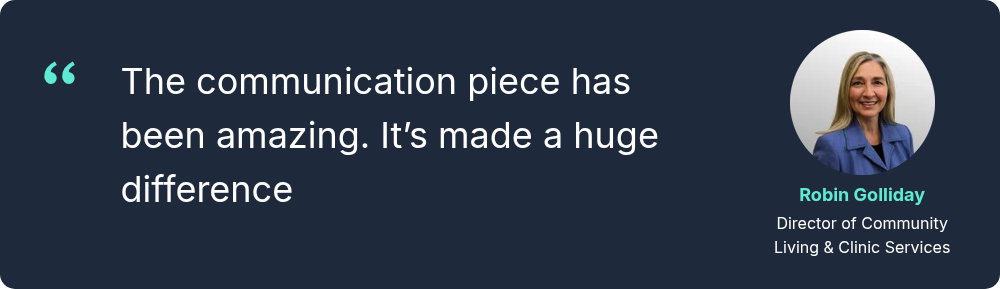
Sunnyside called out a reality most Life Plan Communities recognize: adoption and enablement can vary by campus and care setting. Assisted living and health care environments may require a slower pace and a more delicate approach.
Sunnyside used training and real-world education to resolve friction points. They kept iterating based on resident feedback. They also emphasized best practices like prioritizing ease of use, using reminders to drive participation, and giving leaders simple ways to communicate, including short video updates delivered through the platform.
Sunnyside’s early results point to a bigger takeaway: engagement tools work when they feel personal, show up at the right moments, and make it easier for residents to participate in daily life.
If your current platform is being “tolerated” instead of used, that is usually the signal to reassess.
If you are a Life Plan Community looking to upgrade your engagement platform and reduce paper-heavy workflows, book time with our team, today.
We transform legacy communication systems into innovative, highly-adopted engagement platforms that support resident well-being and staff efficiency.